
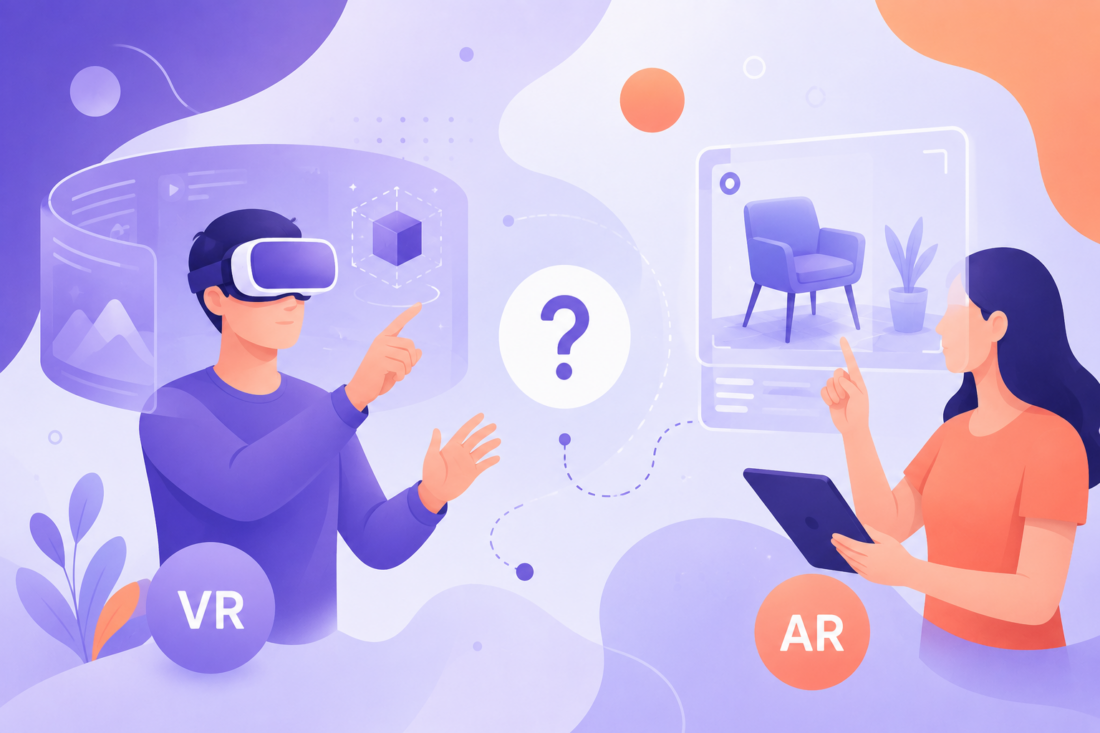
Understanding virtual and augmented reality to make the most of it
Until recently, virtual reality (VR) and augmented reality (AR) were used mainly by university research laboratories and the military.
In fact, they were the only ones who could afford them. The drastic fall in the cost of equipment means that everyone can now get their hands on them, and this is only the beginning!
 Environ 7 min.
According to IDC, the AR/VR market is set to take off over the next five years. The growth rate is expected to exceed 75%. We’re talking about $120 billion by 2022!
Personally, I’ve been interested in the subject since 2015. Ever since I realised how useful VR can be in helping us overcome our fears and cope with our pain.
How can VR be used in training? What is it for? What are the use cases? What skills are required? …
Beyond prototypes, what products? Beyond demos, what added value?
1. Practice makes perfect
Virtual reality training – or, more broadly, ‘immersive learning’ – is the most established and longest-standing application. Ever since Edwin Link’s first flight simulator in 1929, we have known that when we are in a situation, immersed in a realistic scenario, we learn better. And the more I play through these scenarios, the more I consolidate my skills.
On demand, safely and without judgement, VR allows me to have experiences that would be rare, unprecedented, dangerous or very expensive in ‘real’ life. The medical sector has been using it since the 1990s and numerous studies have demonstrated its effectiveness. A recent development is that businesses are embracing it on a massive scale, typically across the Atlantic, to a lesser extent in the UK and much more tentatively in France.
The example of Walmart:
In 2018, more than 200,000 Walmart employees underwent virtual reality training:
- to do their job better,
- to better serve customers (Black Friday),
- respond appropriately to an intrusion and make use of new sales tools.
By 2019, the number of Walmart employees trained in virtual reality will exceed one million, spread across more than 4,500 stores in the United States.
For example, Verizon uses VR to train its sales staff on how to respond appropriately during a robbery.
At Nationwide, the training of insurance assessors has been reduced from three hours to 15 minutes by training them to assess motor vehicle accidents.
2. To experience the impossible, to project oneself beyond oneself, into another body, another time, another place
Over the past 15 years, academic research has proliferated and converged on one key point: VR is a powerful tool for fostering empathy (watch Chris Milk’s TED Talk here).
Experiencing VR changes my attitudes and behaviour to a far greater extent than watching a video or playing a role-playing game.
Walking in someone else’s shoes and observing how others react, experiencing what it’s like to be a woman, a person with a disability, or a homeless person… it helps us understand others better and, as a result, treat them as we would like to be treated.
Clouds over Sidra: this VR film, available in 15 languages, has doubled donations to UNICEF. It has raised at least an additional billion dollars for charities supporting Syrian refugees
Companies are now starting to use these empathy simulations in their diversity and inclusion programmes.
People with physical disabilities can now have experiences that would otherwise be impossible for them! Anyone can now walk on the Moon.
3. Virtual reality is a holistic experience that involves the body and its movements
I can read and watch films; I don’t need VR for that. But what makes virtual and augmented reality so unique is that it engages not only my mind but also my body. I turn my head to speak to someone; I move around to collect an object (Pokémon Go). The graphics don’t need to be particularly sophisticated. What matters is the immersion and interaction, the blend of the physical and the digital. Take Beat Saber, for example: it’s one of the best-selling VR games, yet it’s very basic! What makes it so successful is that it engages both your body and your mind.
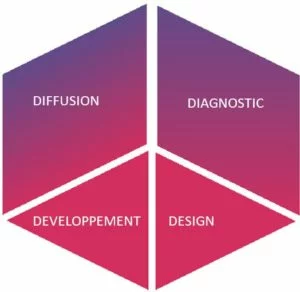
4. A wide range of skills is required for an immersive learning project
It is a new medium, not merely an extension of video or digital learning in the context of training. We need to proceed methodically and bring together the best expertise.
- Diagnosis: advice,
- Design: pedagogy, technical aspects, scripting, subject matter expertise
- Development: coding, graphic design, animation
- Distribution: marketing, facilitation…
5. Choose VR only when it’s the best option: it’s the use that matters, not the tool
As with any educational project, the starting point is the learner, followed by their learning objectives. And VR isn’t always the best choice.
Next, you need to select the team, not only for their skills but also for their understanding of the advantages and disadvantages of VR. This will enable them to anticipate and overcome obstacles and setbacks, thereby ensuring the project’s success at every stage.
6. Knowing how to surround yourself with the right people
VR and AR offer a real opportunity to improve our lives, particularly by helping us learn more effectively and sustainably. WiDiD has brought together the best expertise in the field and maintained a down-to-earth approach to provide you with the best possible support for your ideas and projects.
Heavily and freely inspired by the article published at the World Economic Forum by Jeremy Bailenson and Sandra Lopez, Jeremy Bailenson’s brilliant book *Experience on Demand*, and my numerous discussions with WiDiD’s partners and clients.
Plus d'articles
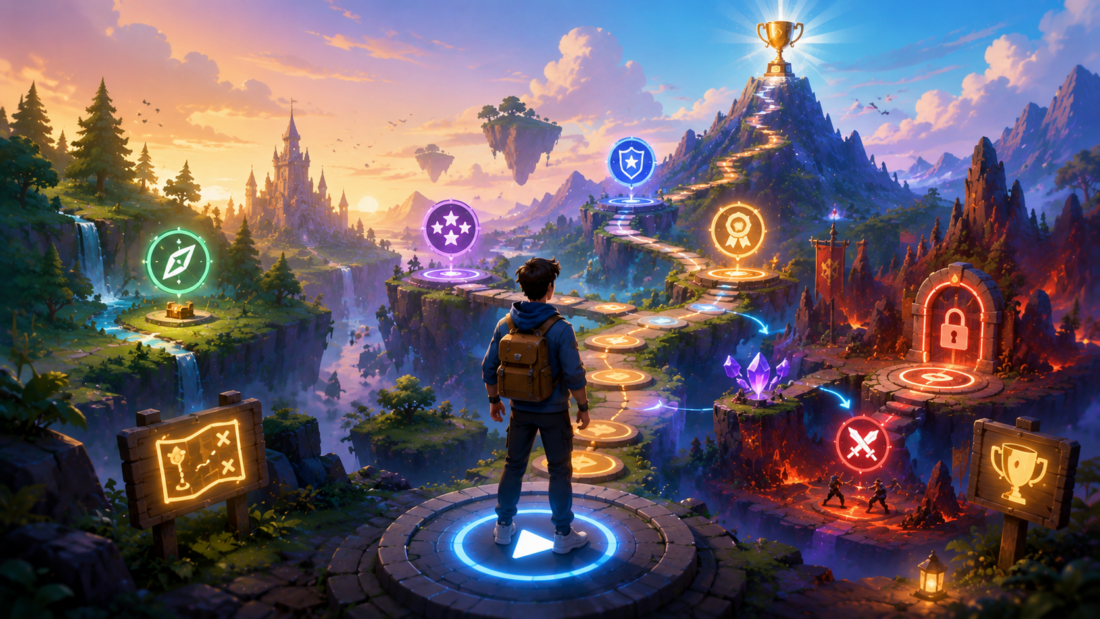
Gamification: it’s your turn!
Gamification is not just about making training more fun: its primary aim is to foster long-term engagement among learners by placing them at the heart of the experience.
By utilising mechanisms such as challenges, progression, rewards and exploration, it fosters engagement, perseverance and a desire to learn. When integrated into a coherent educational approach, gamification becomes a powerful tool for transforming learning into an active and stimulating experience.
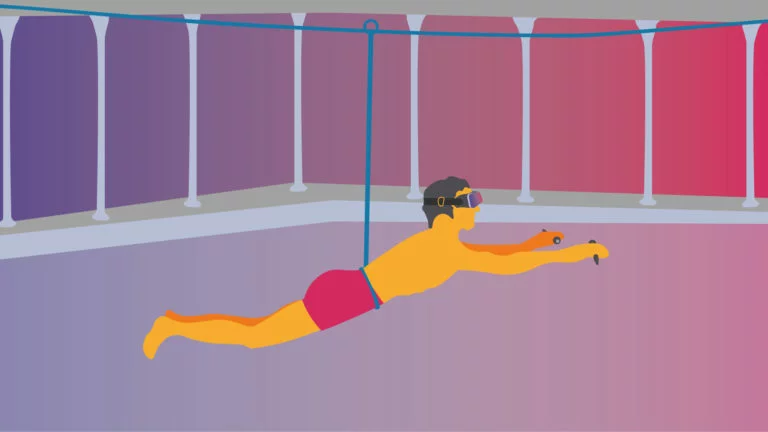
Bloom’s Taxonomy, training and Virtual Reality? Eureka!
From memorisation to creation, every learning process draws on different levels of skill.
Bloom’s taxonomy helps to structure this progression and is now a benchmark in the world of training.
Combined with virtual reality, it opens up new possibilities for learning more effectively through immersive and engaging scenarios.
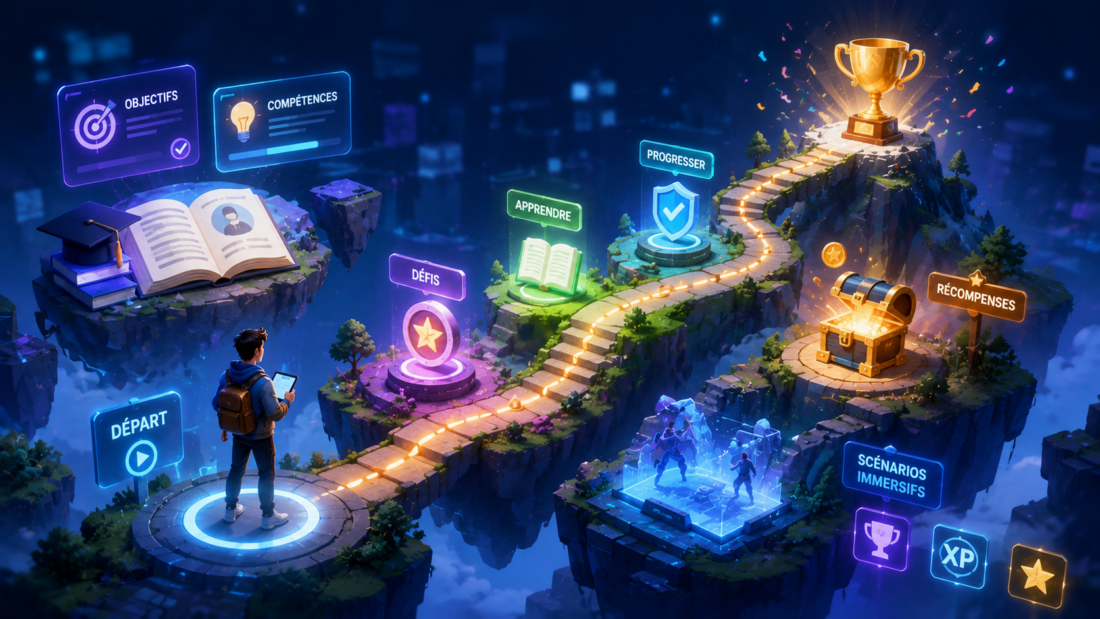
Gamification and training
Gamification in training involves incorporating game-based mechanisms to boost learner engagement and facilitate the acquisition of new skills.
Challenges, levels, rewards, progression and immersive scenarios help transform what can sometimes be a passive learning experience into a more interactive and motivating process.
Combined with technologies such as virtual reality, gamification promotes engagement, retention and action by placing the learner at the heart of the experience.