
What is gamification?
Gamification involves incorporating game mechanics into contexts that are not inherently playful.
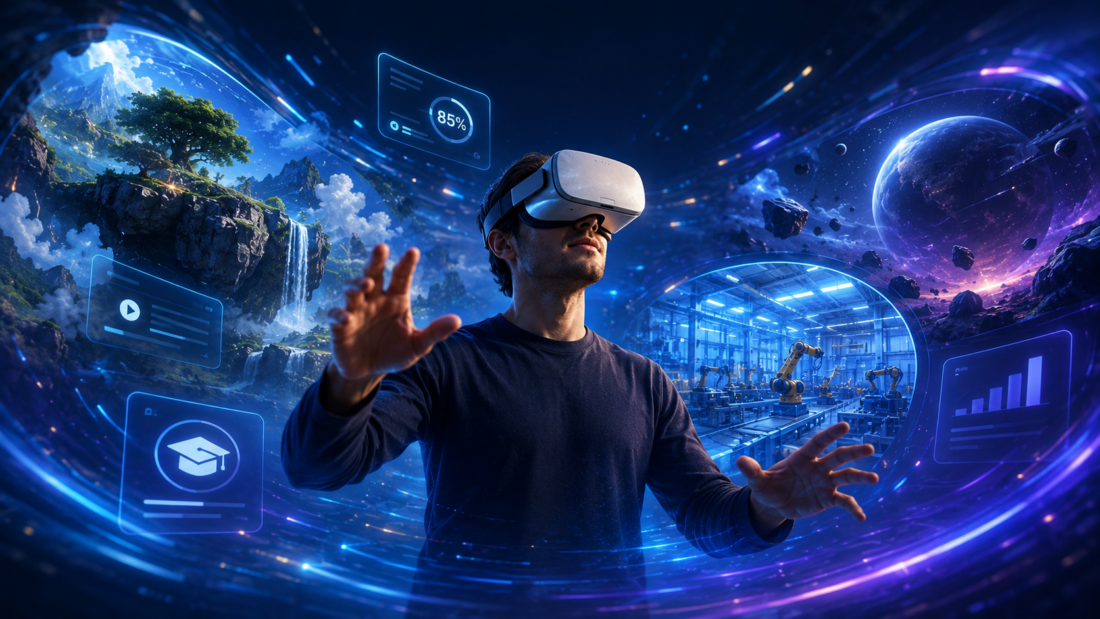
Its aim is simple: to boost engagement, stimulate motivation and promote learning through elements such as challenges, rewards, levels and progression systems. When combined with immersive technologies such as virtual reality, it transforms the training experience into an interactive adventure where the learner takes full control of their own journey.
 Environ 3 min.
The term ‘gamification’ is still often a taboo subject in companies; how many times have we heard people say: ‘I don’t want my staff playing games instead of training’. But what a mistake!
The term has been in use since 2002, thanks to Nick Pelling, who was one of the first people to define gamification. His definition can be summarised as follows: “Applying gaming techniques to make electronic transactions enjoyable and quick.”
Applying game-like accelerated user interface design to make electronic transactions both enjoyable and fast. Nick Pelling
Then, in 2014, Gartner redefined ‘gamification’ as “the use of game-like mechanisms to drive engagement in non-game business contexts and change the behaviour of a target audience in order to achieve business outcomes ”.
The use of game mechanics to drive engagement in non-gaming business scenarios and to change the behaviour of a target audience in order to achieve business outcomes. Gartner
As we can see, there are several definitions, but they all agree on one point: gamification is not a game.
Gamification should not be confused with the act of playing; gamification is a learning tool, a method. It helps to trigger emotions and positive user experiences that lead to greater engagement and, in a sense, customer loyalty. In reality, the term ‘gamification’ means that we are using game mechanics and interactions in a different context.
For example, the use of scores, badges, rewards or rankings to motivate learners to learn and to continue their learning beyond the initial content they have viewed.
A few dates to bear in mind…
The concept of gamification did not appear in our world by chance. Indeed, we have been playing board games and video games for over 40 years. To better understand the timeline, here are a few key dates:
- 1974: The first game to offer players a reward, based on the role-playing game *Dungeons & Dragons*
- 2002: Nick Pelling coined the term ‘gamification’, which would not become widely used until eight years later!
- 2005: Microsoft developed a scoring system based on the completion of in-game challenges.
- 2009: Launch of the Foursquare app, which utilises the concept of gamification.
- 2013: Gamification became a reality for organisations (Nike, universities, etc.) and became more widespread.
- 2014: Anna-Livia Cardin-Gomart’s MOOC, ‘Gamify Your Service’
Gamification has, nevertheless, become a buzzword over the last ten years. You only need to look at this Google Trends graph to see how it has evolved since 2011.

To read on, click here.
Plus d'articles
Gamification: it’s your turn!
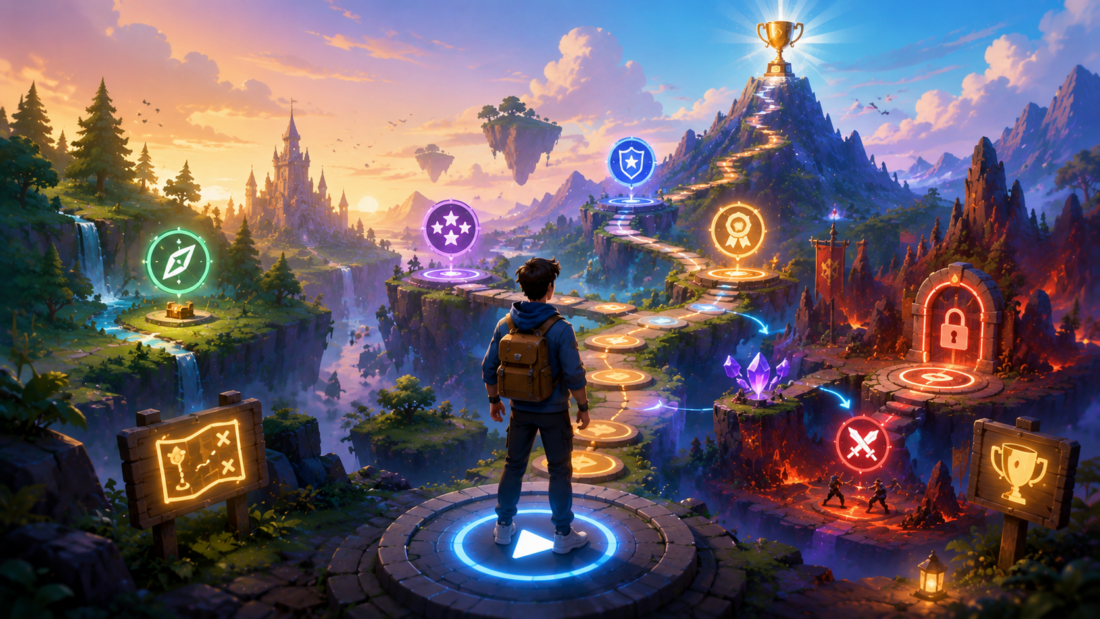
Gamification is not just about making training more fun: its primary aim is to foster long-term engagement among learners by placing them at the heart of the experience.
By utilising mechanisms such as challenges, progression, rewards and exploration, it fosters engagement, perseverance and a desire to learn. When integrated into a coherent educational approach, gamification becomes a powerful tool for transforming learning into an active and stimulating experience.

Bloom’s Taxonomy, training and Virtual Reality? Eureka!
From memorisation to creation, every learning process draws on different levels of skill.
Bloom’s taxonomy helps to structure this progression and is now a benchmark in the world of training.
Combined with virtual reality, it opens up new possibilities for learning more effectively through immersive and engaging scenarios.
Gamification and training
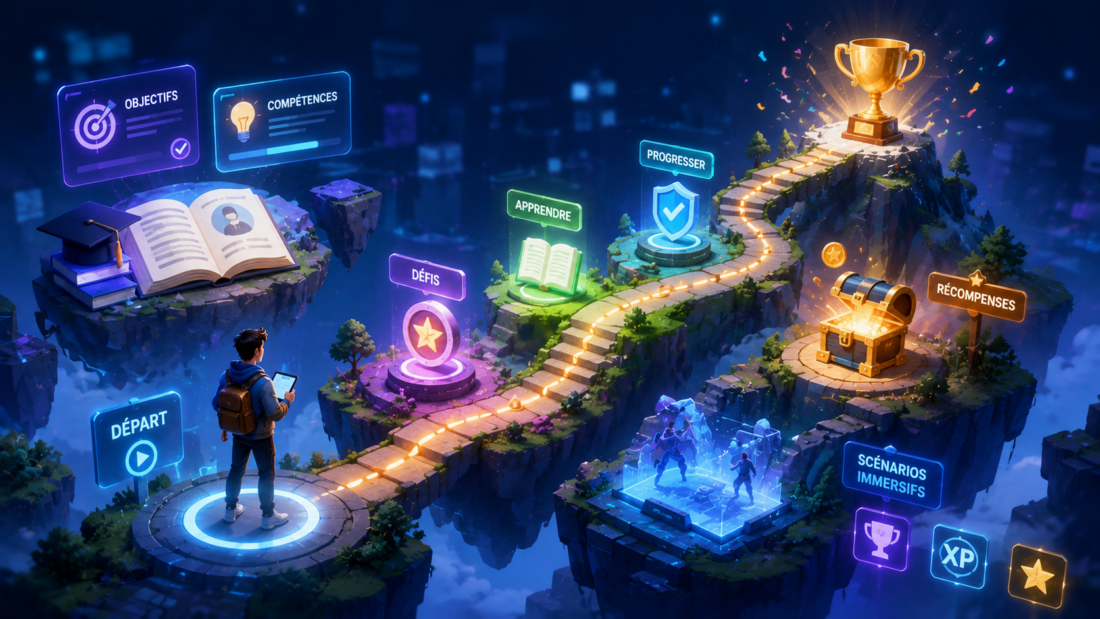
Gamification in training involves incorporating game-based mechanisms to boost learner engagement and facilitate the acquisition of new skills.
Challenges, levels, rewards, progression and immersive scenarios help transform what can sometimes be a passive learning experience into a more interactive and motivating process.
Combined with technologies such as virtual reality, gamification promotes engagement, retention and action by placing the learner at the heart of the experience.