
Virtual reality is more effective than e-learning
For several years now, e-learning has established itself as a flexible and accessible training solution.
But when it comes to developing skills, retaining information in the long term or recreating real-life situations, its limitations quickly become apparent.
Thanks to its level of immersion and interactivity, virtual reality offers a new way of learning that is more engaging and closer to real-world scenarios.
So, is VR really more effective than traditional e-learning? Results observed in practice tend to suggest so.
 Environ 1 min.
Is virtual reality more effective than e-learning?
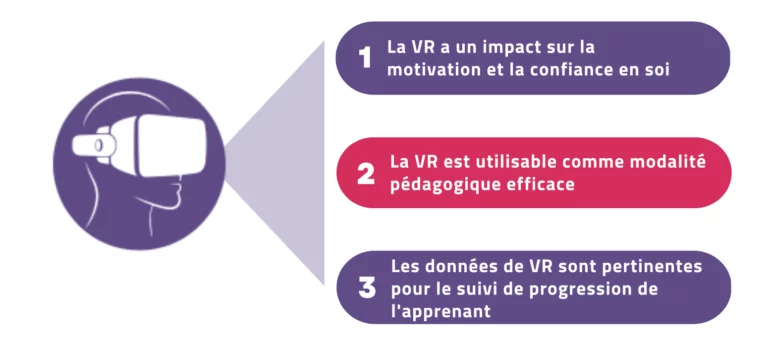
WiDiD has assessed the impact of virtual reality on learning as part of a programme supporting school leavers (NEETs) in the AURA region to enter sectors facing labour shortages. To this end, we focused on bicycle repair. Our programme is based on three pillars: exploring careers, building confidence and learning by doing.
Objective: To compare skills acquisition between virtual reality and e-learning
- Restore confidence
- A different way of learning
- Assessing your progress
- Practising for interviews
- Practise a simple repair
- Become more professional
Assumptions and actions
Results
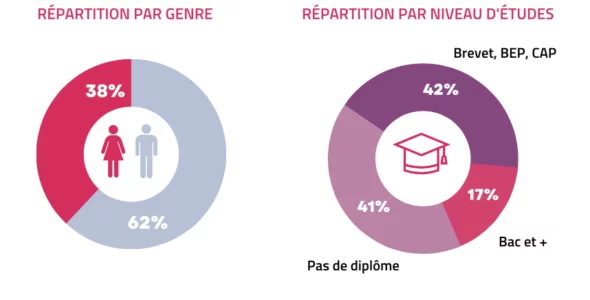
According to INSEE, in France, 52% of young men aged 16–25 are NEETs, compared with 48% of young women.
According to INSEE, in France, among 16- to 25-year-olds, 21% of NEETs have no qualifications, 30.6% hold a CAP, BEP or Brevet, and 19.2% have at least a two-year post-secondary qualification.
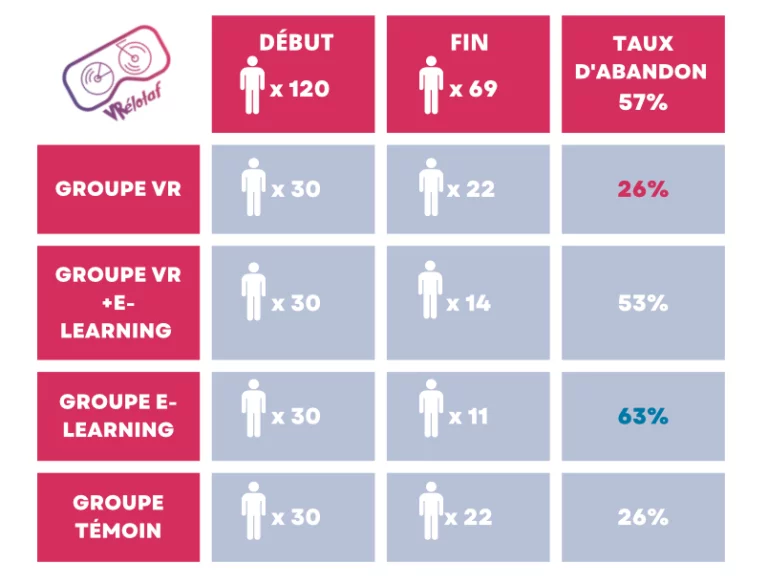
Six out of ten people dropped out of the e-learning group, compared with just three out of ten in the VR (virtual reality) group.
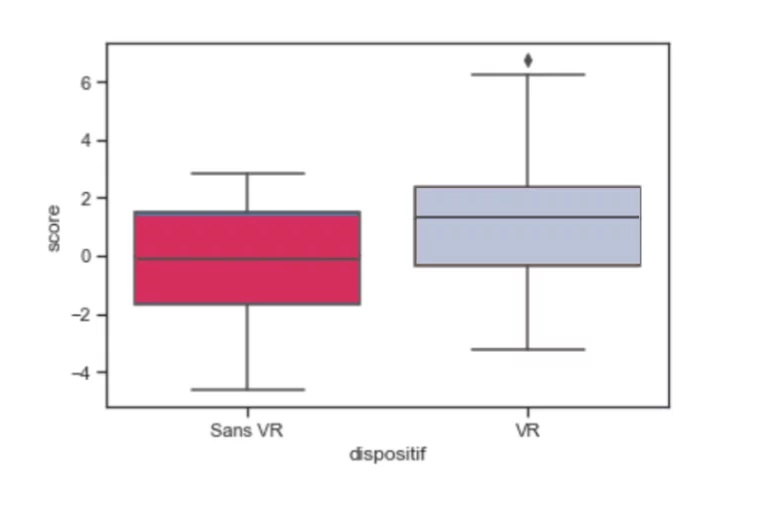
The group using VR performs twice as well as the others and also shows greater progress.
Plus d'articles
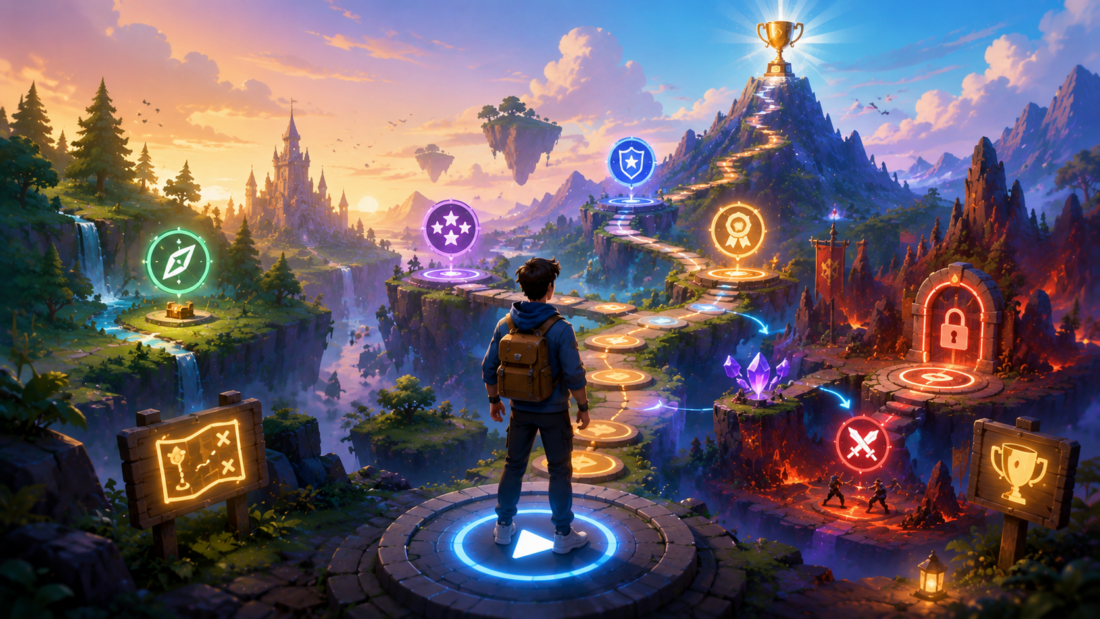
Gamification: it’s your turn!
Gamification is not just about making training more fun: its primary aim is to foster long-term engagement among learners by placing them at the heart of the experience.
By utilising mechanisms such as challenges, progression, rewards and exploration, it fosters engagement, perseverance and a desire to learn. When integrated into a coherent educational approach, gamification becomes a powerful tool for transforming learning into an active and stimulating experience.
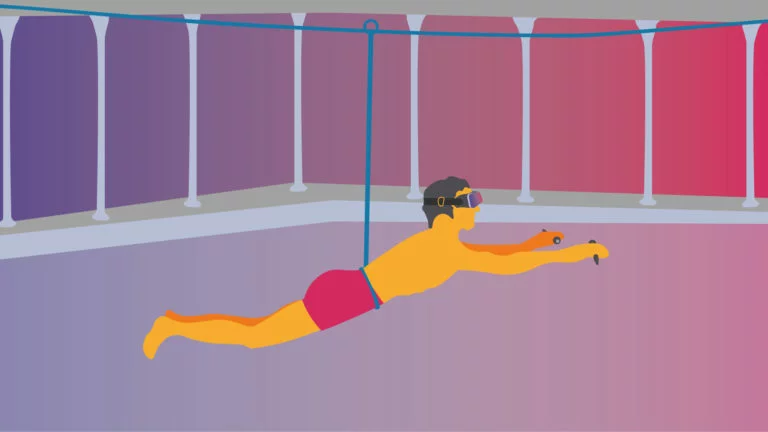
Bloom’s Taxonomy, training and Virtual Reality? Eureka!
From memorisation to creation, every learning process draws on different levels of skill.
Bloom’s taxonomy helps to structure this progression and is now a benchmark in the world of training.
Combined with virtual reality, it opens up new possibilities for learning more effectively through immersive and engaging scenarios.
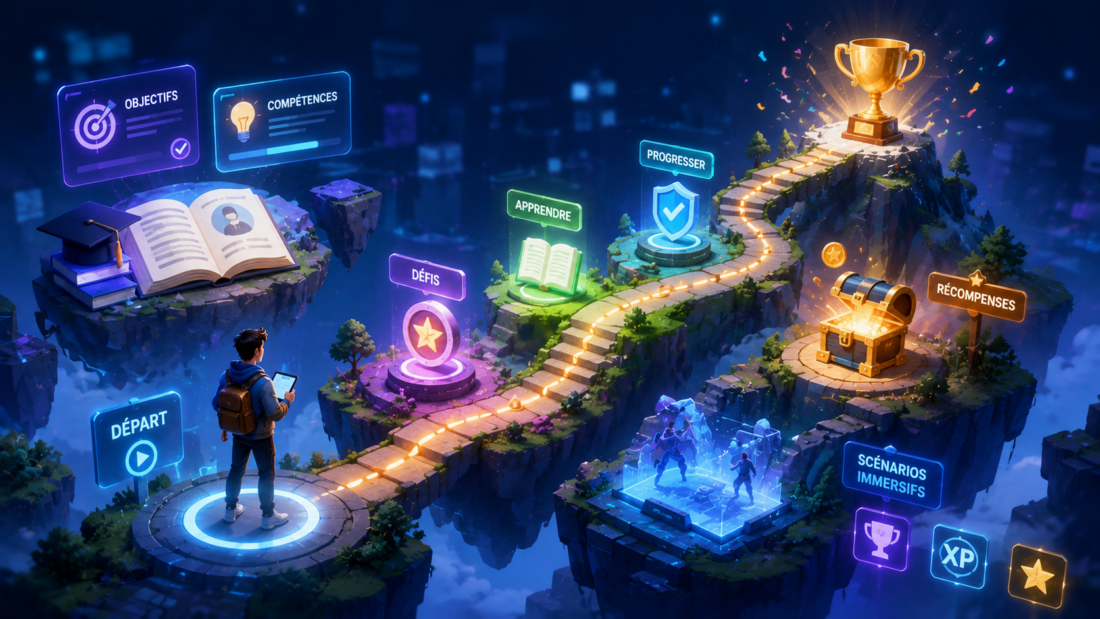
Gamification and training
Gamification in training involves incorporating game-based mechanisms to boost learner engagement and facilitate the acquisition of new skills.
Challenges, levels, rewards, progression and immersive scenarios help transform what can sometimes be a passive learning experience into a more interactive and motivating process.
Combined with technologies such as virtual reality, gamification promotes engagement, retention and action by placing the learner at the heart of the experience.